
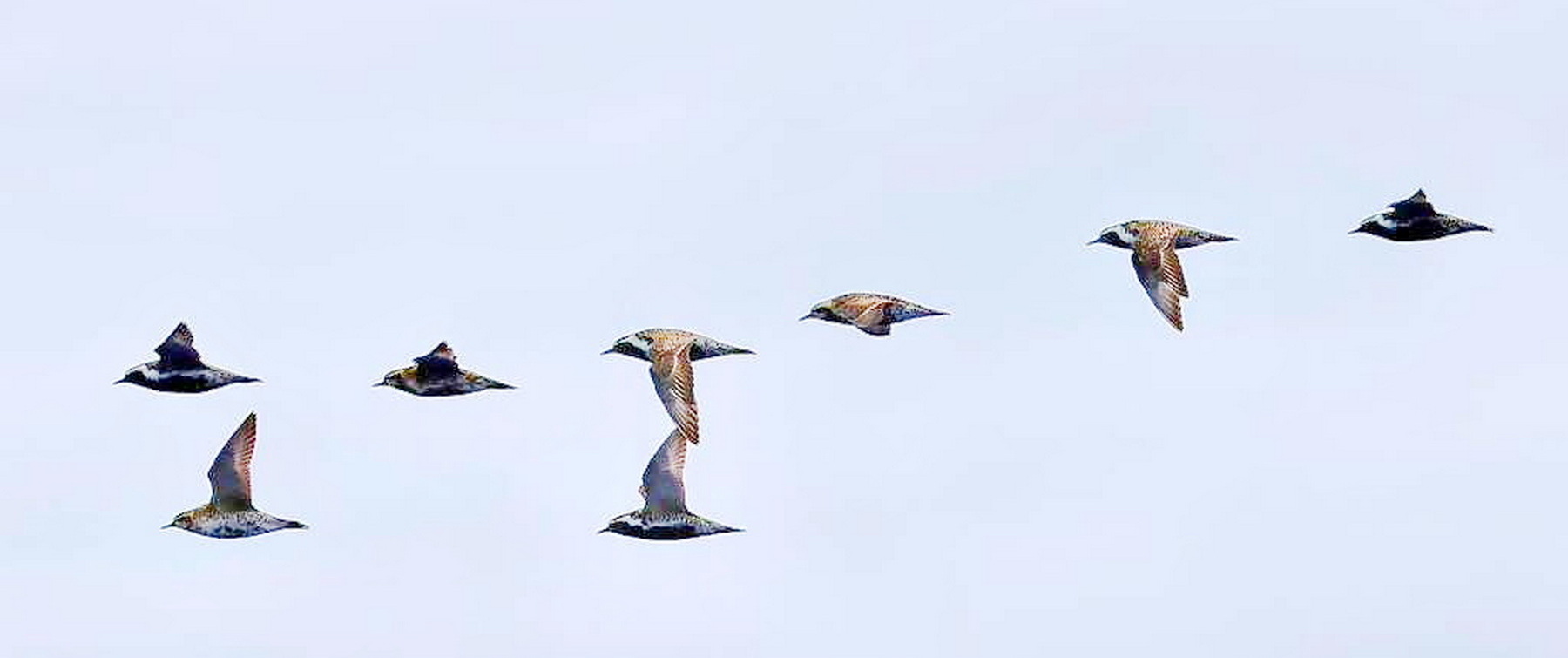
Kōlea flying past Lalo (French Frigate Shoals) May 5, 2026. ©Martha Brown on her way to Kamole (Laysan) by boat.
May 15, 2026
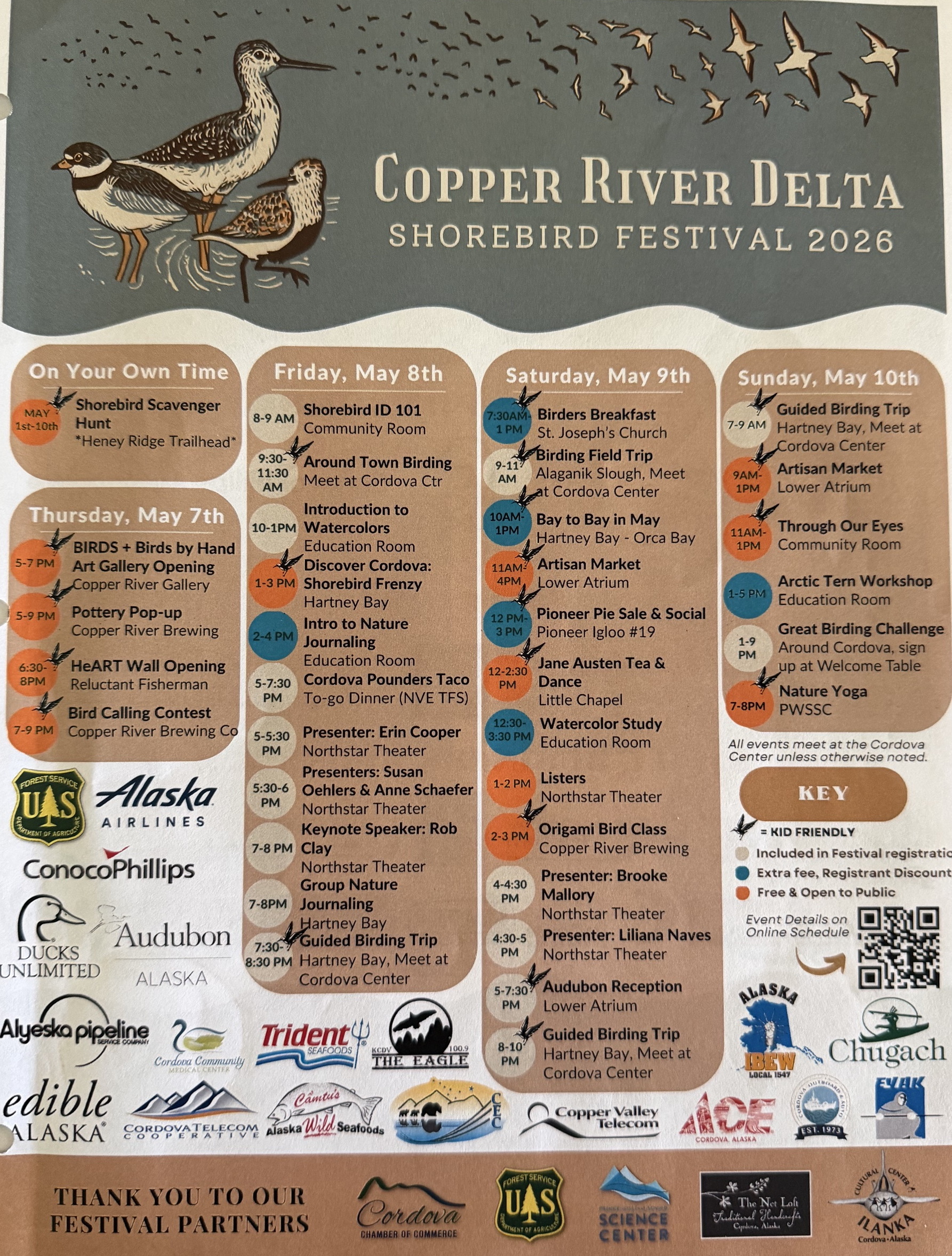
Knowing that Hawaiʻi’s kōlea fly to Alaska the end of April or early May is one thing. Going there with them is another. After my attendance last week at two of Alaska’s shorebird festivals, one in Homer’s Kachemak Bay and the other in Cordova’s Copper River Delta, I came home with a new appreciation of all migratory shorebirds.
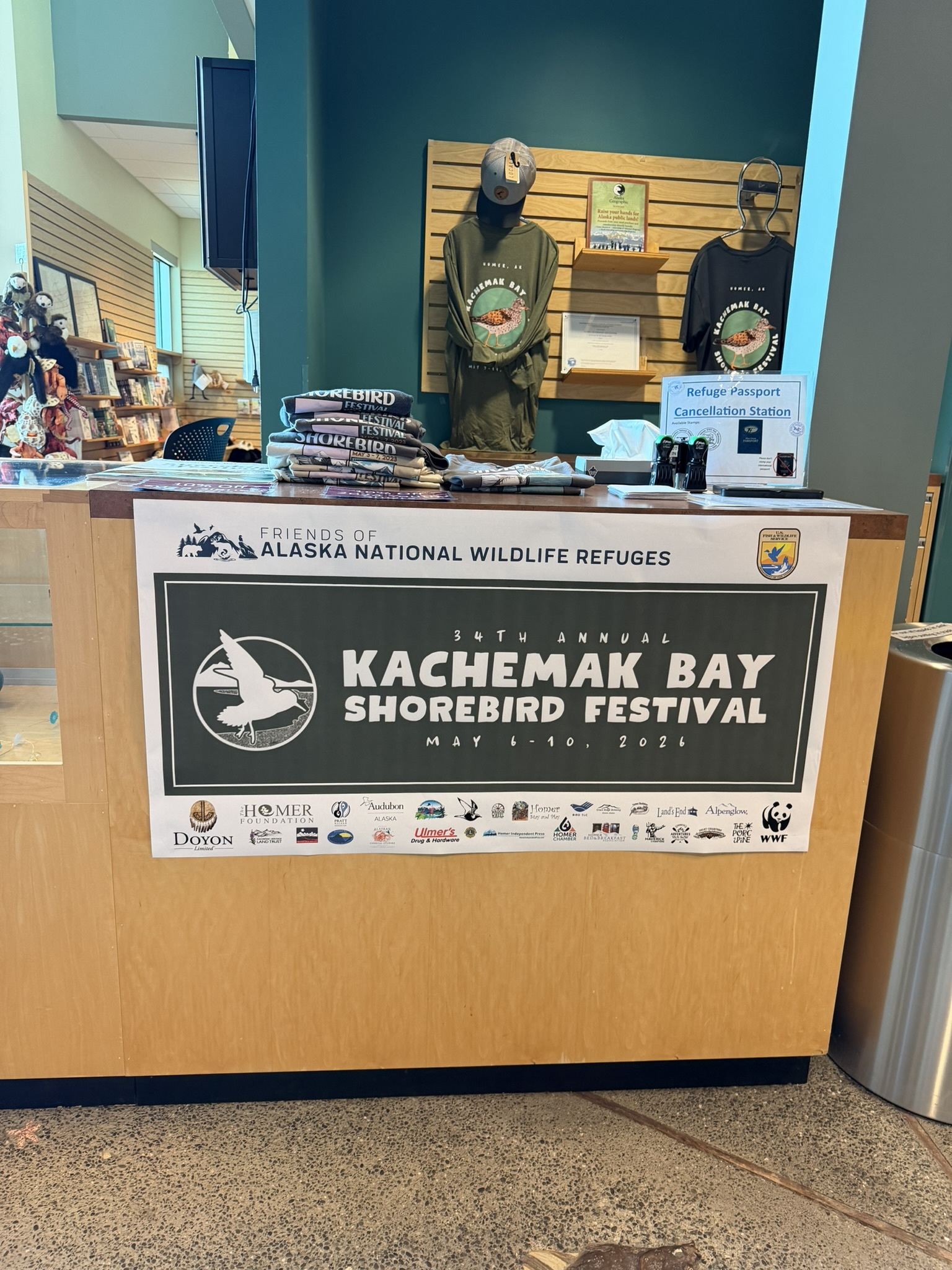
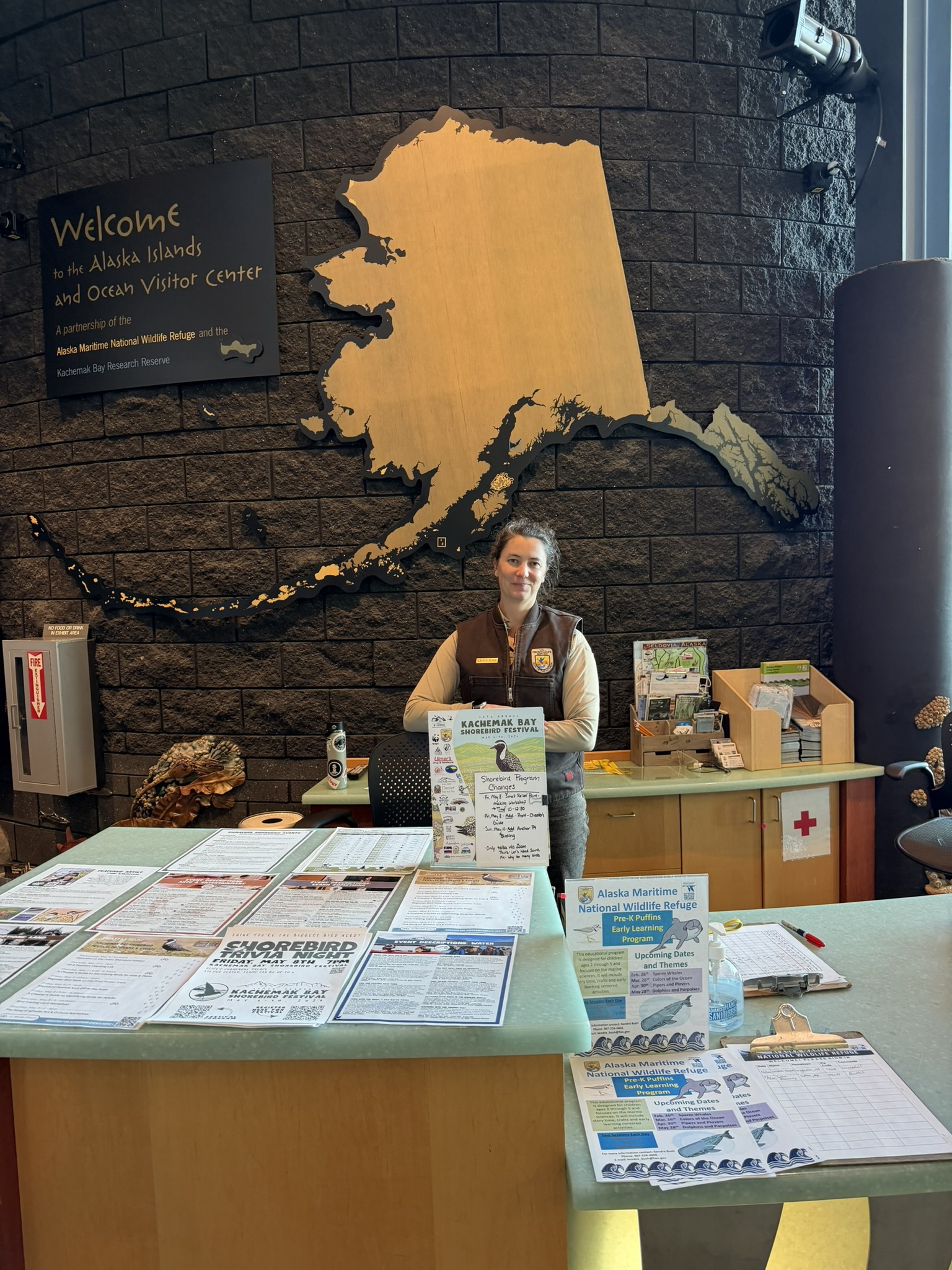
Lora Haller, Visitor Center Manager, Alaska Maritime National Wildlife Refuge, Homer, Alaska. ©Susan Scott
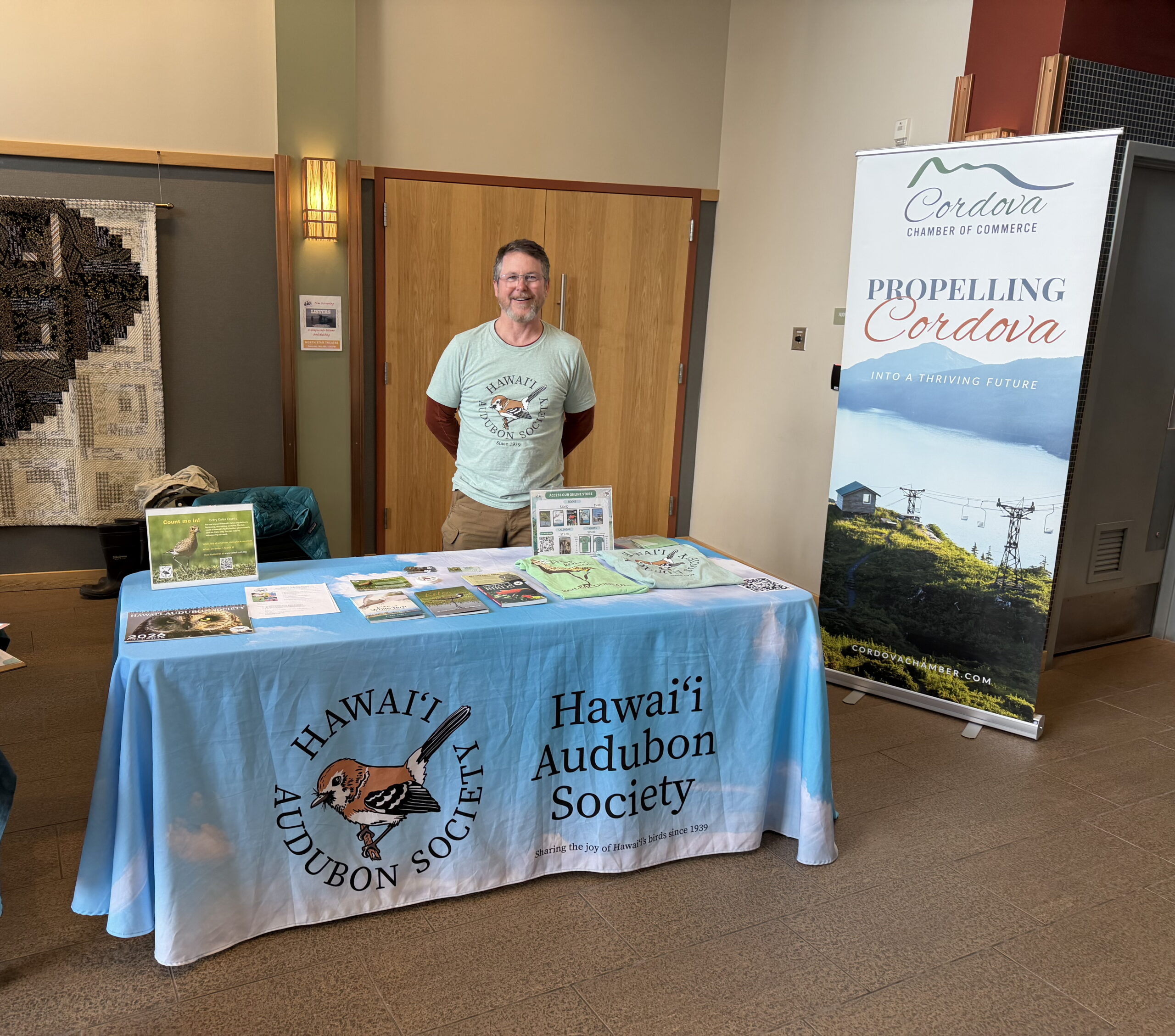
Executive Director, Keith Swindle, at our table in Cordova. ©Susan Scott
I have always been a fan, but watching those little birds run, peck, and cuddle up together in those remote tidal flats, knowing they just flew thousands of miles in who-knows-what-weather, well, it was hard to believe they were even here.
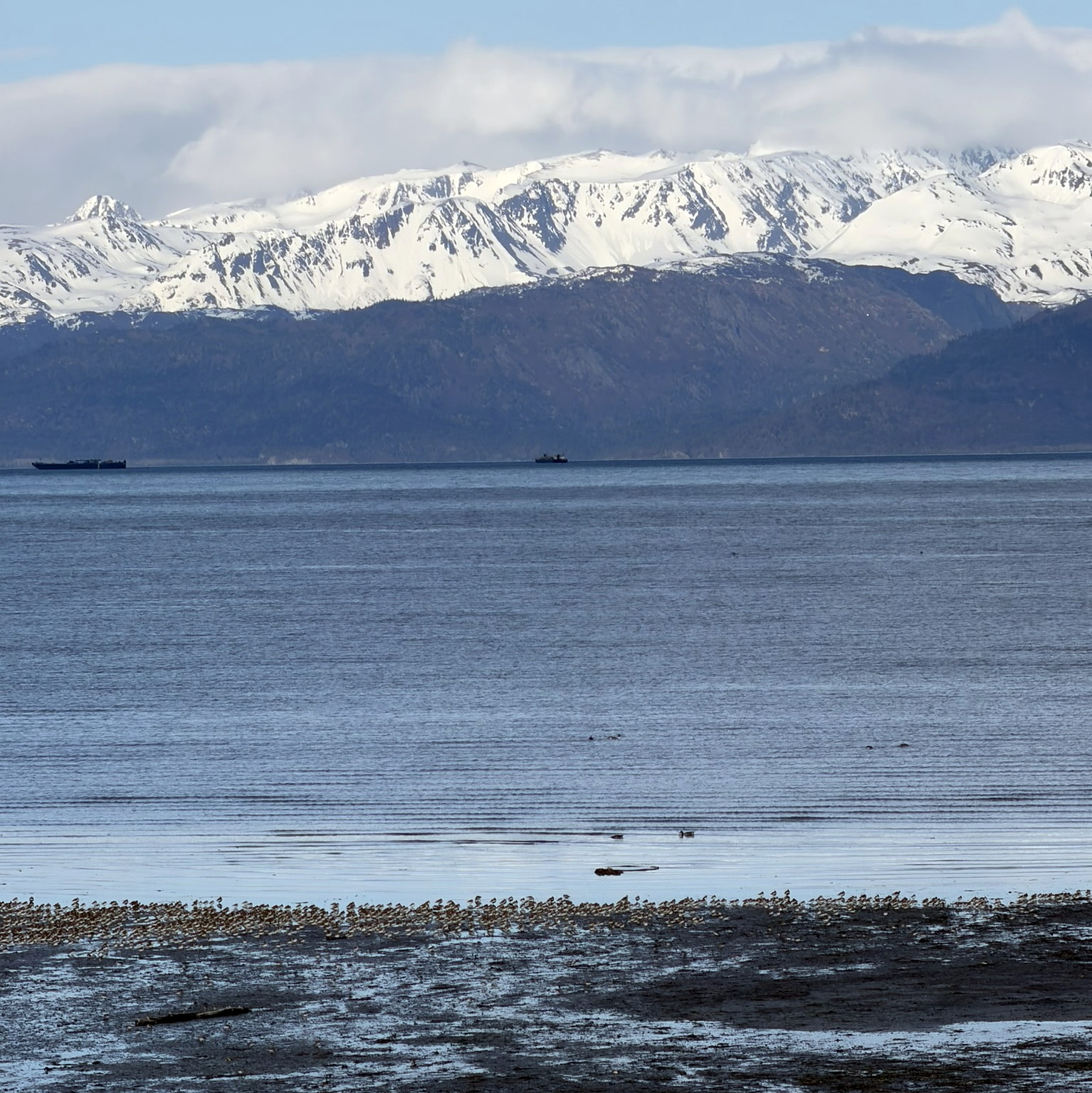
Western Sandpiper (mostly) flock in Mud Bay, Homer Spit Road. ©Susan Scott
Western Sandpiper flock video1
Western Sandpiper flock video2
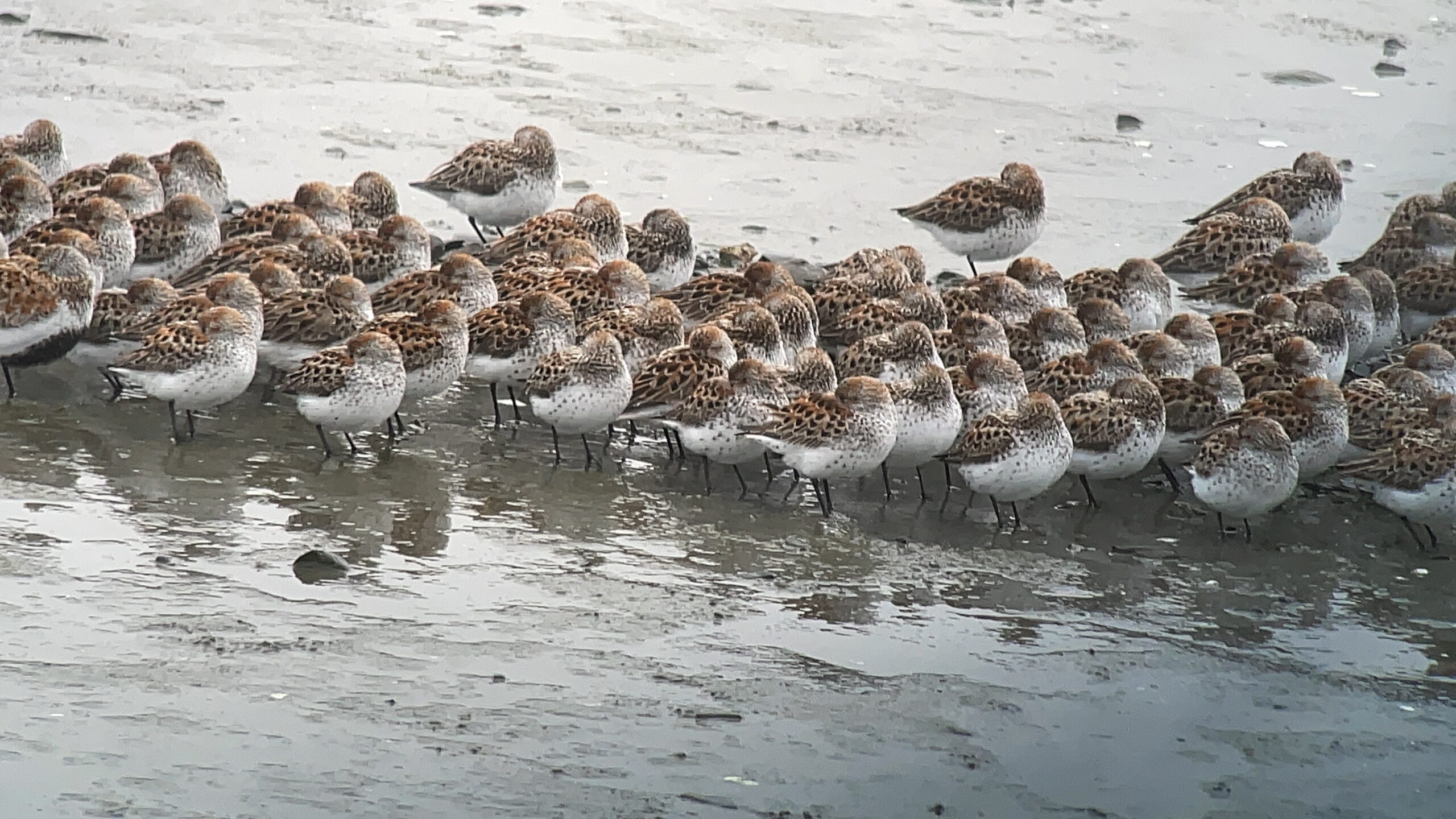
Western Sandpipers shot with iPhone through a spotting scope. ©Nancy Brusseau
My trip was a cold, wet, windy dose of Alaska reality, particularly hard after my lifelong tropical island residence. I consider any temperature below 80 degrees a chilly day.
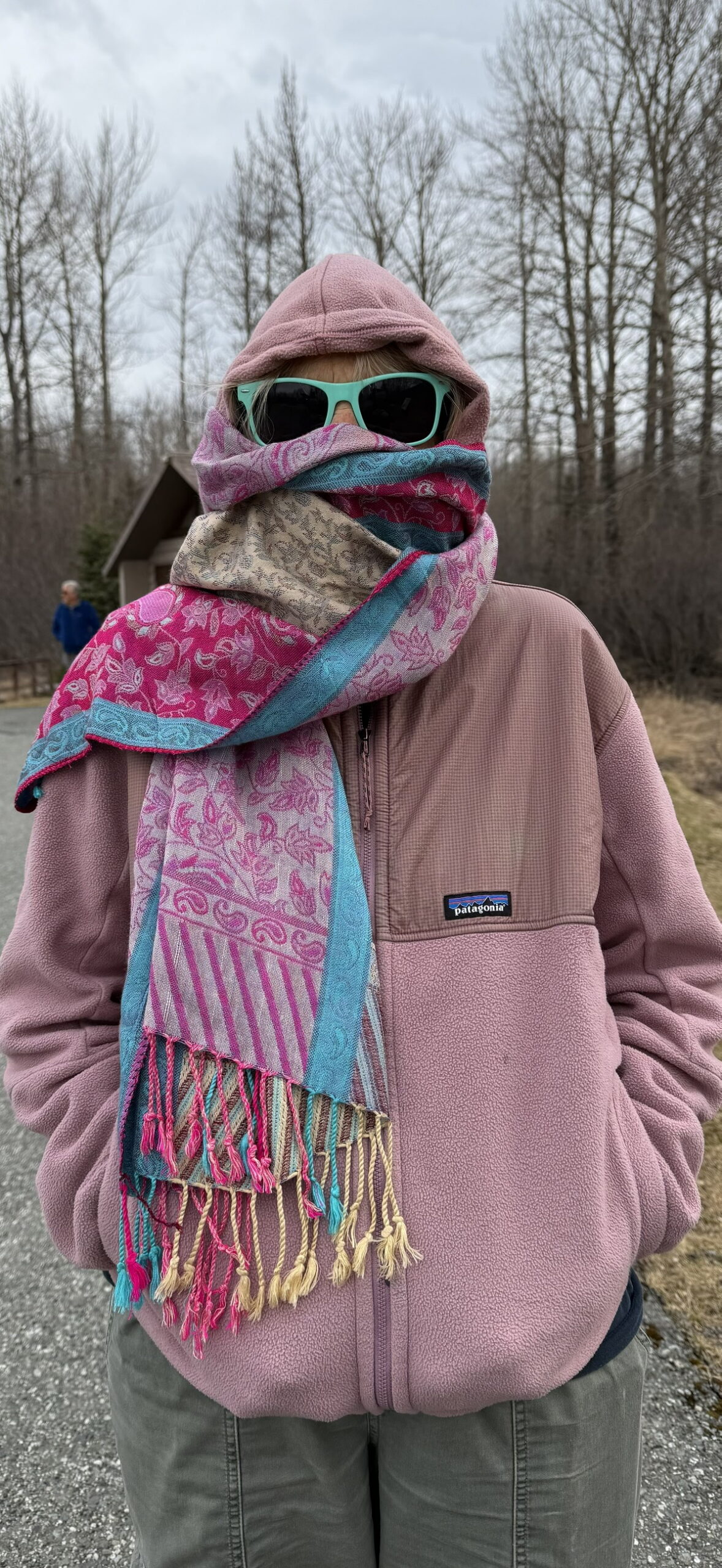
Hawaii resident (me) enjoying Alaska. ©Keith Swindle
I migrated to the festivals via Alaska Airlines with fellow shorebird admirers who, being tougher than me, stood outside in nasty weather to look at the birds through spotting scopes. My eye-watering, chapped lip, shivery experience kept me mostly in the car with windshield wipers going and heater on full blast. Some Alaskans, however, were outside in shorts.
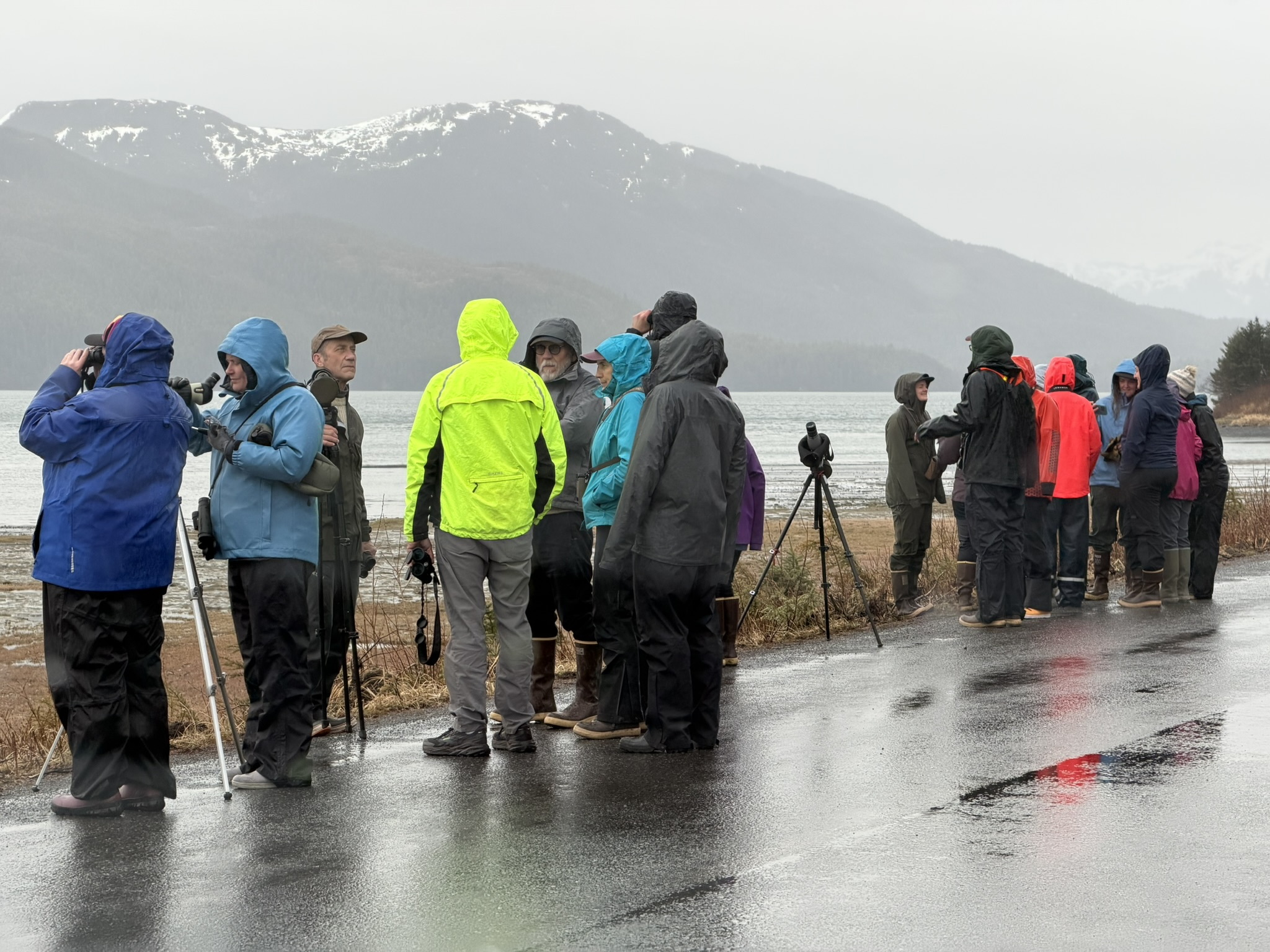
Wipers on.
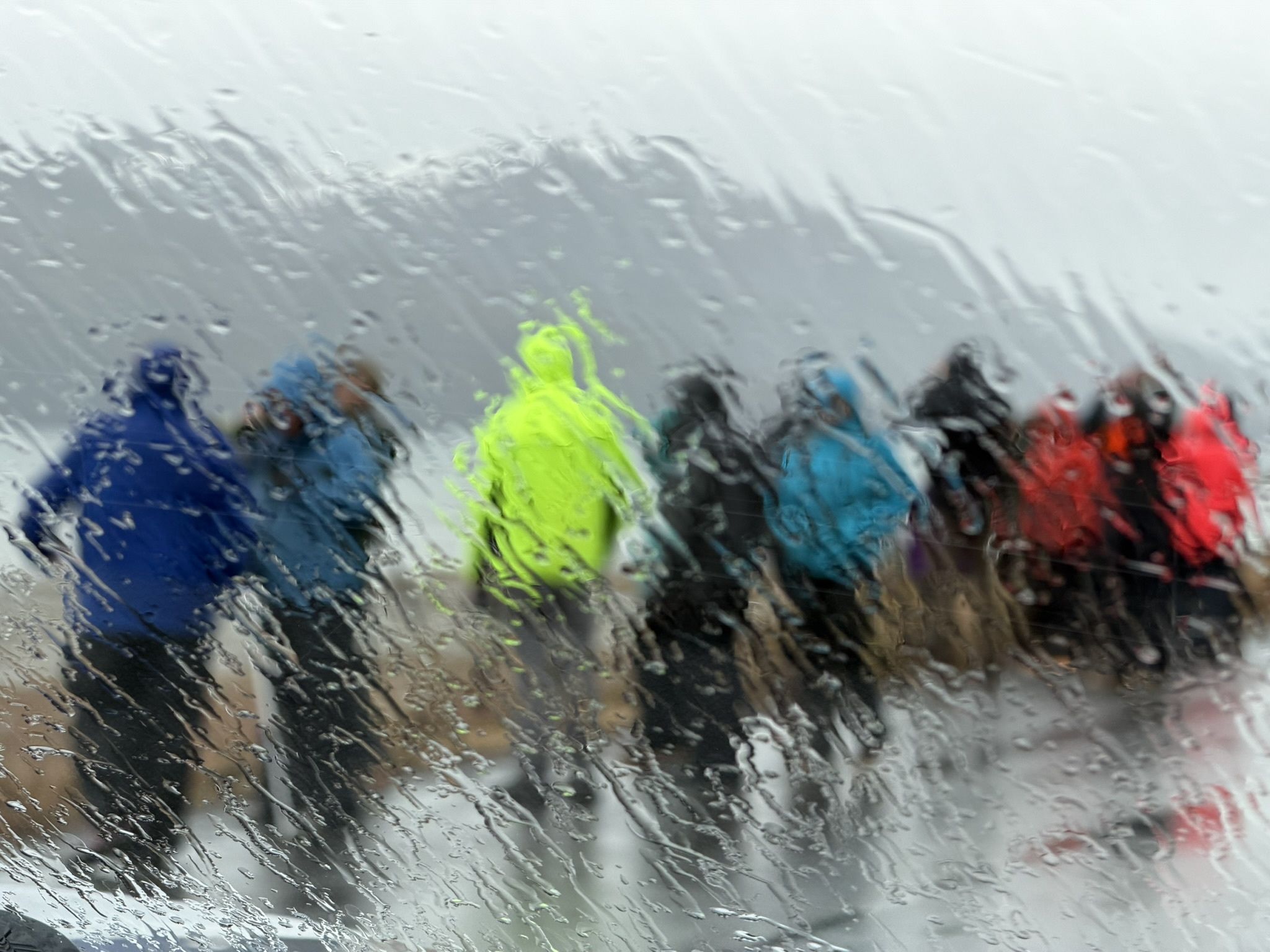
Wipers off.
Most of the birds we saw were Western Sandpipers, flying and foraging by the thousands. A smattering of other shorebirds, such as Dunlins, Oyster Catchers, Bar-tailed Godwits and several others caused even me to get out of the car (but briefly.)
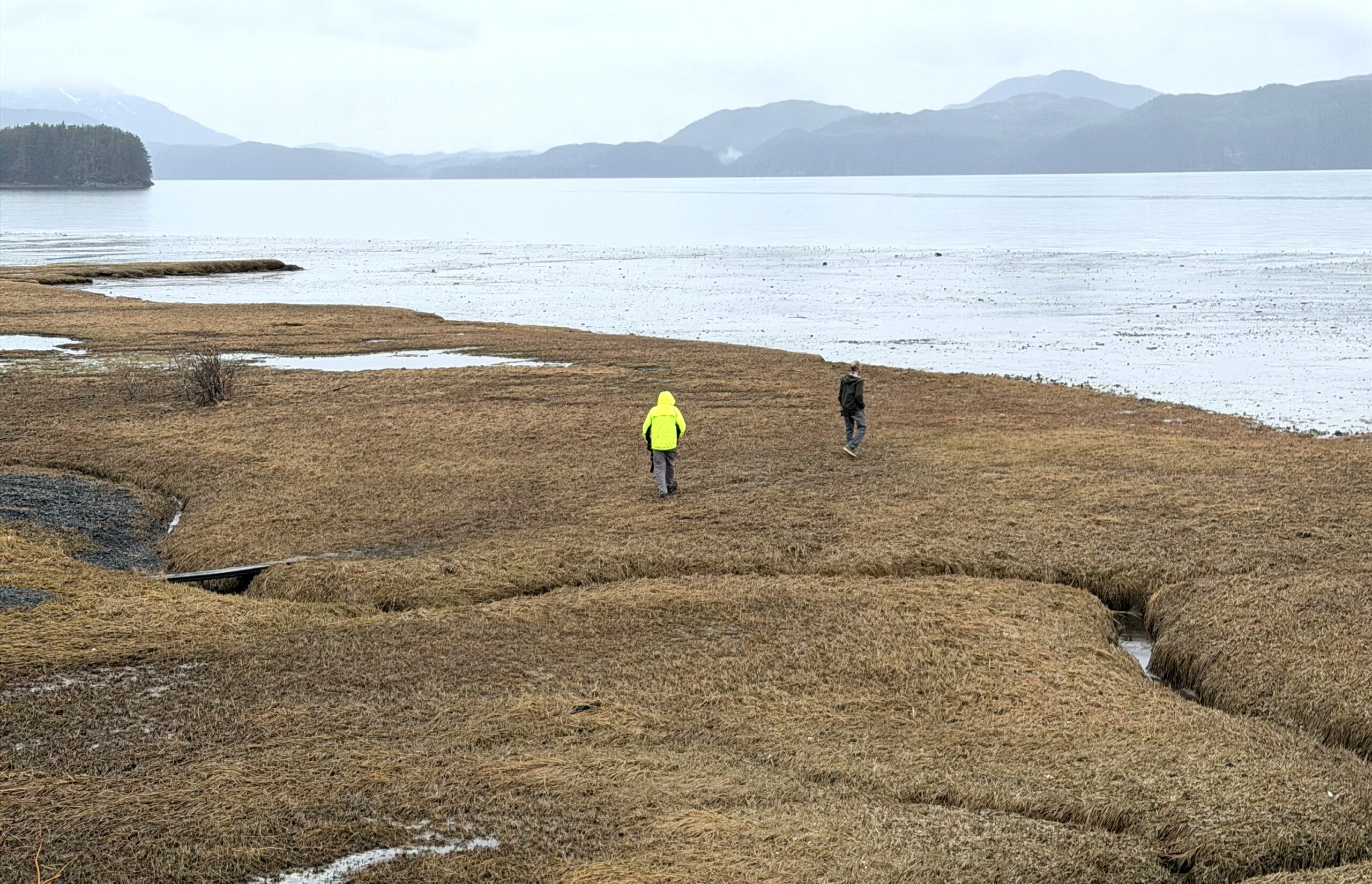
Hartney Bay, a prime birding site in Cordova. ©Susan Scott
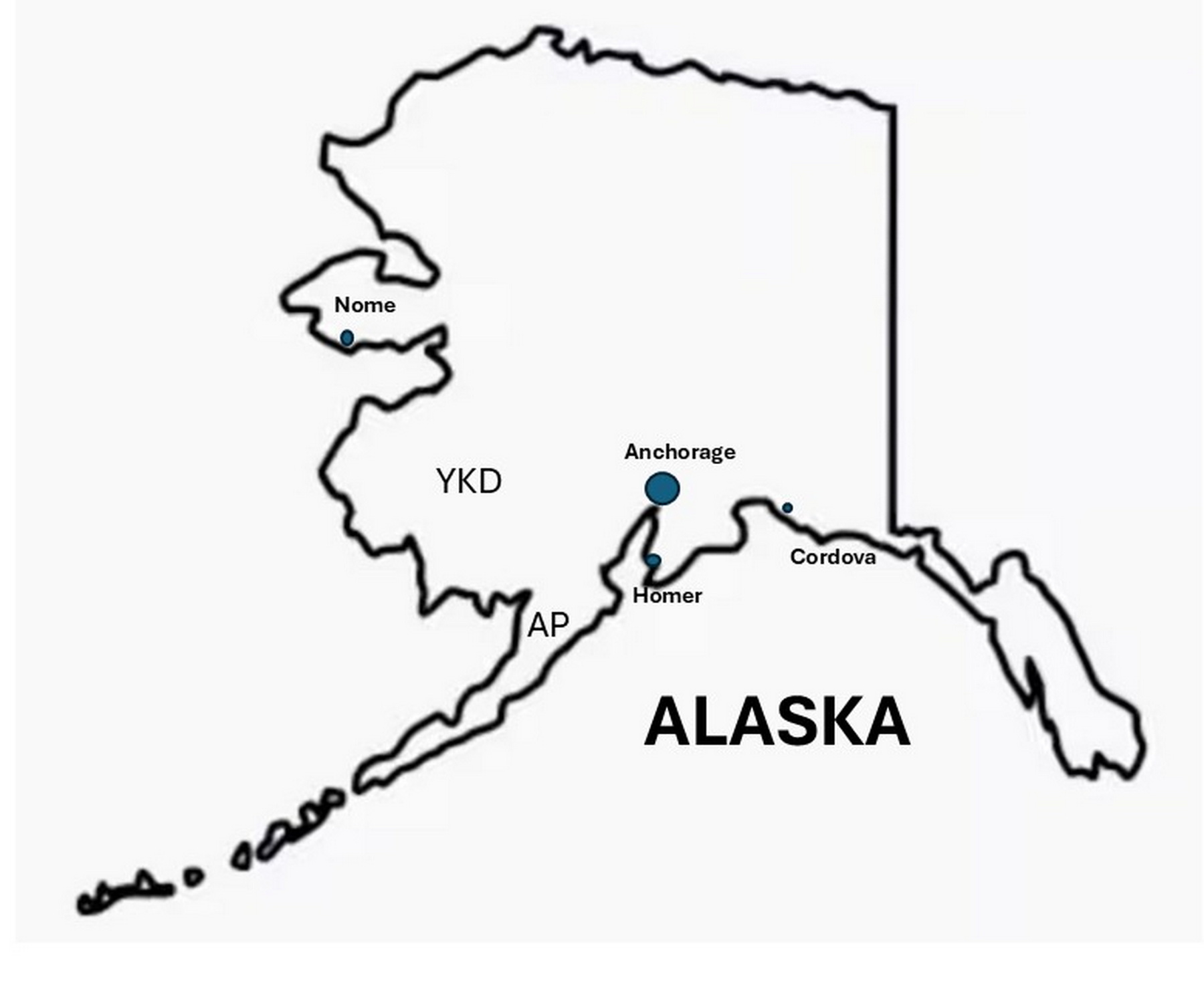
The species featured this year at the Kachemak Festival was the American Golden Plover, a close cousin in our kōlea. One person reported seeing one kōlea in the area. I saw neither species. The absence of Pacific Golden Plovers here didn’t surprise us. Thanks to Wally Johnson’s decades of tracking research, we know Hawaii’s kōlea breed mostly in the Yukon-Kuskokwim Delta (YKD) and the Alaska Peninsula (AP.)
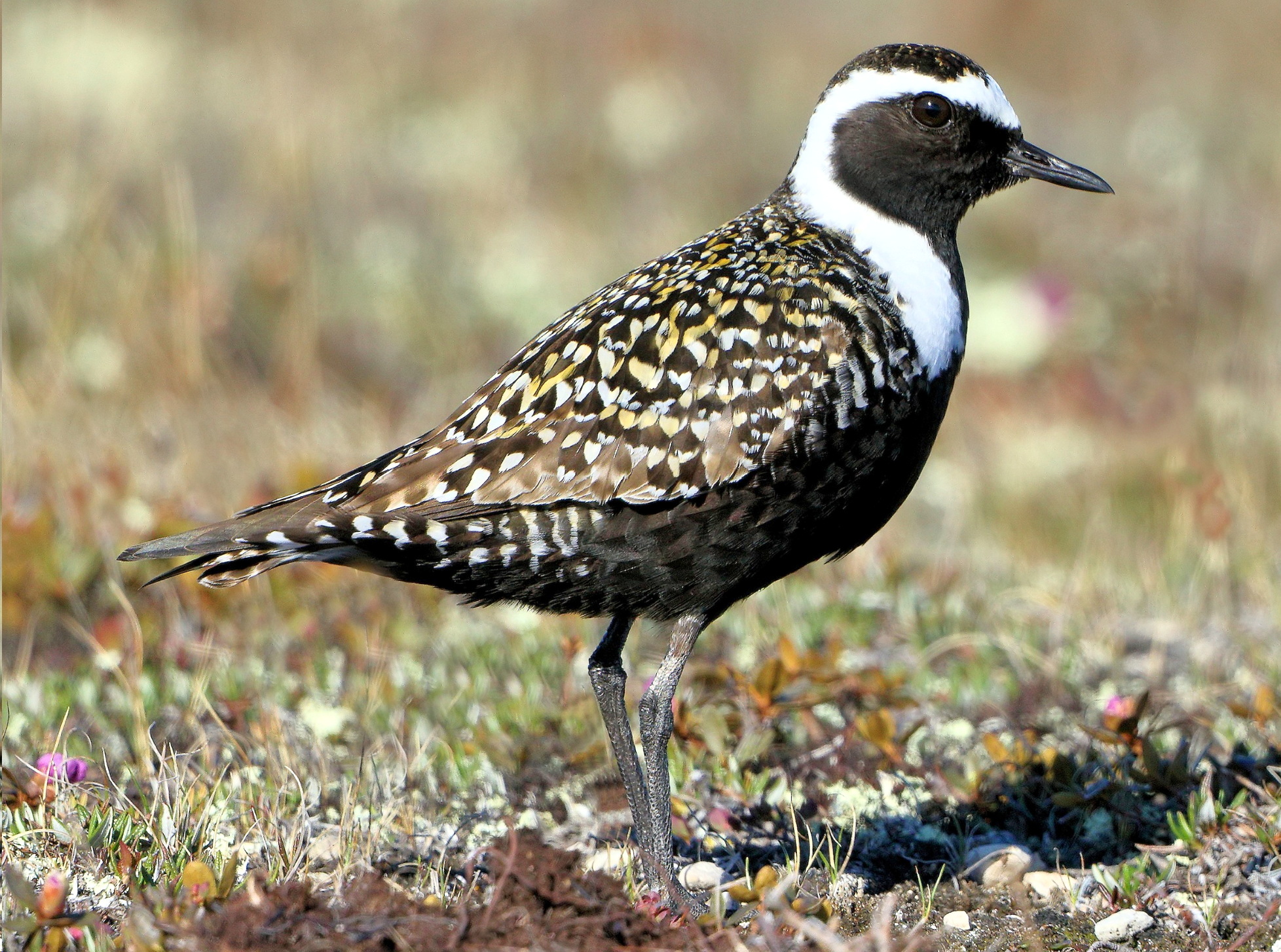
American Golden Plover male in breeding plumage. (White stripe short.) © Ian K. Barker via Cornell Lab of Ornithology, Birds of the World
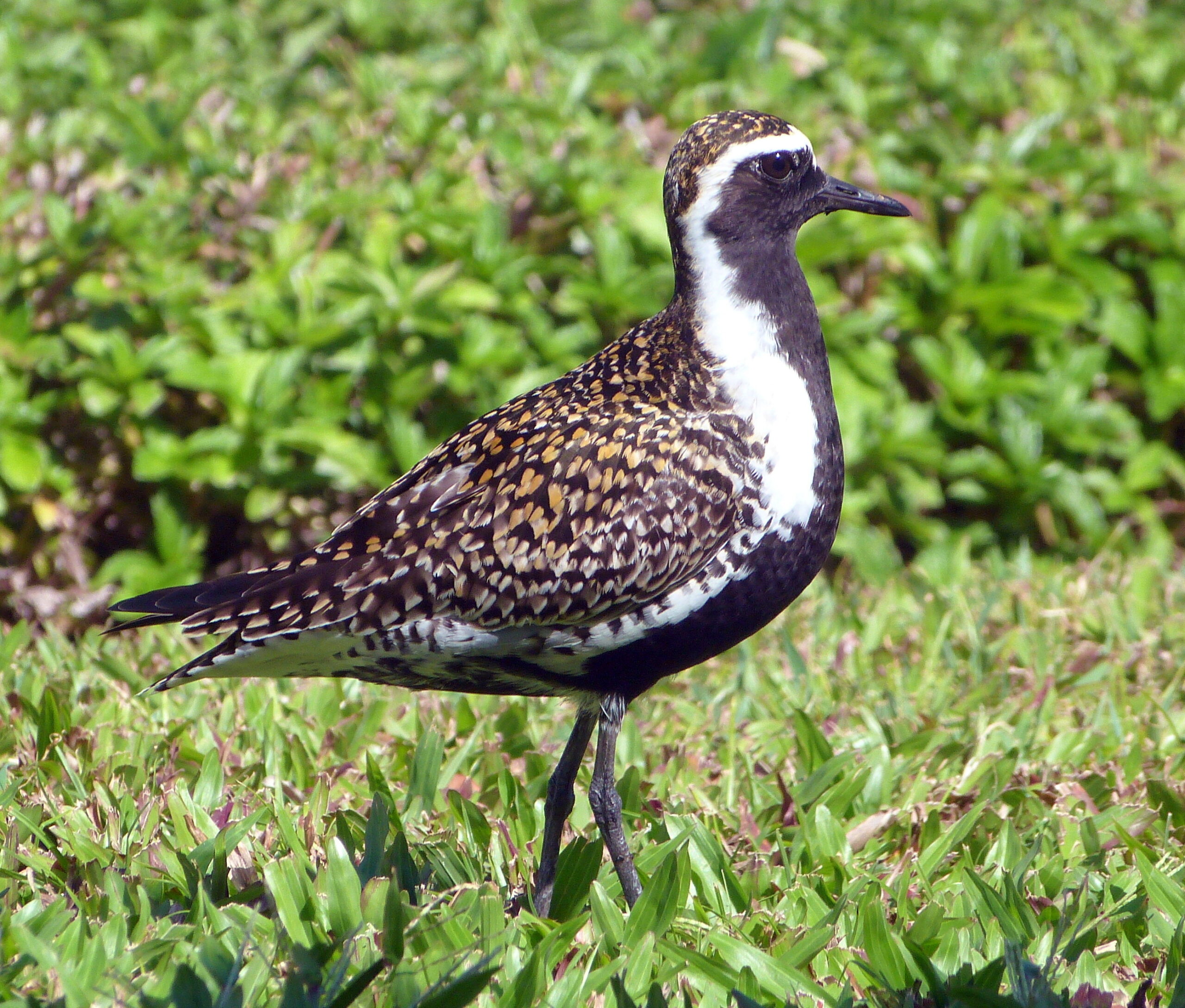
Pacific Golden Plover AKA kolea male in Hawaii in April. White stripe extends down sides. ©Susan Scott
Even so, it was thrilling to see the occasional ʻakekeke (Ruddy Turnstone) and ʻūlili (Wandering Tattler), shorebirds that also winter in Hawaiʻi. It was also thrilling to be around so many people celebrating the arrival of these astonishing birds, as well as so many fans of Hawaiʻi.
Below: Hawaiʻi Audubon Society president (me) representing kōlea, Hawaiʻi and the Society in Homer.

 I think that all birds are miracles of nature, but this trip convinced me that migratory shorebirds are the planet’s superheroes. And for baring their legs between mud boots and puffy jackets in 36-degree rain and blustery wind, Alaskans are the superhumans.